USF Health Study Uncovers Space Travel's Impact on Women
As space missions become longer and ambitions for deep-space travel grow, scientists are working to understand how life beyond Earth may affect every system in the human body. Two years after her initial study took flight, Begum Mathyk, MD, and collaborators are continuing to push…
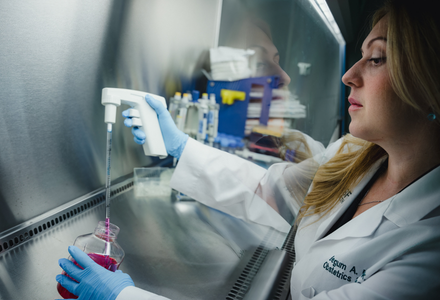
As space missions become longer and ambitions for deep-space travel grow, scientists are working to understand how life beyond Earth may affect every system in the human body. Two years after her initial study took flight, Begum Mathyk, MD, and collaborators are continuing to.
In a first-of-its-kind study, a team led by Mathyk, a physician-scientist in the USF Health Morsani College of Medicine Department of Obstetrics and Gynecology, set out to understand the impact of space travel on the vaginal microbiome. Published in Frontiers in Microbiology, the study.
What Happened
Their work provides the first evidence that altered gravity and spaceflight-related stress can significantly affect the vaginal microbiome in women, while having minimal effect on the oral microbiome. The vaginal microbiome plays an important role in women's health, helping support immune function.
As an OBGYN, she wonders what would happen if she has a patient one day who asks if there are any precautions she should take for space travel.
Is it something that can be reversed later on?
In addition, astronaut corps include a growing proportion of women, and medical research has traditionally skewed toward males, leaving knowledge gaps in women's health and sex-specific responses to spaceflight.
Key Details
Disruption to its microbial balance brought on by extreme physiological or psychological stress has been linked to inflammation, the increased potential for infection and altered immune responses. In conditions such as endometriosis, microbial dysbiosis is associated with chronic inflammation, altered immune responses.
Such work is becoming increasingly pertinent as space missions grow longer and the possibility of lunar habitation and deep-space travel moves closer to reality.
She also collaborates with USF Health Voice Center researchers, Yael Bensoussan and Jamie Toghranegar to evaluate voice biomarkers for applications in space medicine.
Her research also includes an NIH-funded project using advanced tissue chips to better understand how the space environment affects female reproductive physiology and studies investigating how spaceflight may influence future fertility.
Why It Matters
"It has also emerged as a non-invasive biomarker for gynecological disease detection, cancer, pregnancy and health monitoring." Despite its importance, changes to the vaginal microbiome have not yet been explored in space travel conditions, until now.
The study builds on Mathyk's previous work examining women's health in space, including the first gynecologic ultrasound studies in microgravity.
The findings, she adds, provide an important foundation for understanding how the microbiome may contribute to human adaptation to spaceflight and may ultimately help inform strategies to support astronaut health during future space missions.
What Reports Say
Coverage of the story so far points to:
Continued reporting by Mirage News as more details emerge