Northrop Grumman launches robotic spacecraft to repair and extend life of satellites
Northrop Grumman has launched a sophisticated robotic spacecraft designed to service satellites in orbit, potentially allowing expensive space assets to be repaired, upgraded, moved and kept operational long after their original fuel supplies have been depleted. The company’s Mission Robotic Vehicle, or MRV, launched from…
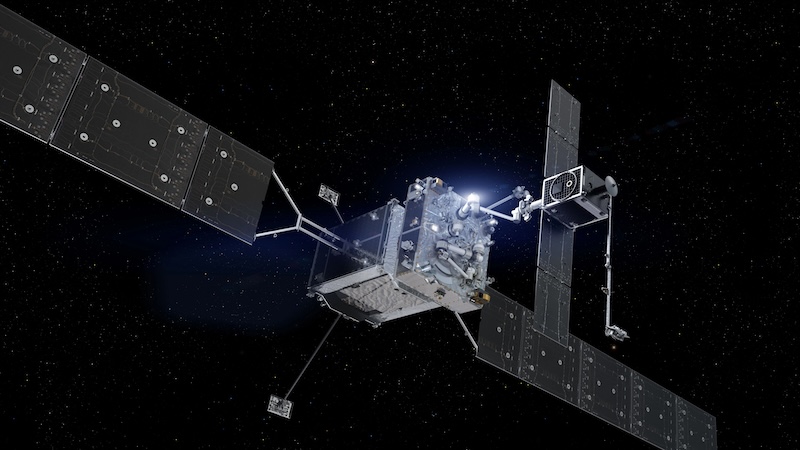
Northrop Grumman has launched a sophisticated robotic spacecraft designed to service satellites in orbit, potentially allowing expensive space assets to be repaired, upgraded, moved and kept operational long after their original fuel supplies have been depleted. The company’s Mission Robotic Vehicle, or MRV, launched.
Equipped with two fully articulated robotic arms, the MRV is essentially a mobile robot mechanic for satellites operating thousands of miles above Earth. Northrop Grumman says the spacecraft will be capable of satellite inspection, relocation, repair, upgrades, debris removal and even robotic assembly in.
What Happened
One of the MRV’s first jobs will demonstrate a potentially important new model for extending the working lives of satellites. The three Mission Extension Pods, or MEPs, launched alongside the spacecraft are effectively small propulsion modules that can be permanently attached to.
MEV-1 made history in February 2020 when it docked with Intelsat 901, becoming the first commercial spacecraft to dock with a satellite in geosynchronous orbit for life-extension services.
SpaceLogistics says its goal is to establish a fleet of commercial servicing vehicles in geosynchronous orbit capable of addressing a wide range of servicing requirements.
Northrop’s longer-term ambition is correspondingly large.
Key Details
Many large communications satellites remain technically functional when they reach the end of their planned lives but run short of the propellant required to maintain their correct position and orientation. Instead of replacing the entire satellite, an MEP can provide additional propulsion.
The combination could eventually create something closer to a reusable service vehicle than a conventional satellite: a robotic spacecraft capable of moving between customers, carrying out physical work and replenishing its own fuel supply.
Northrop says it plans to use AI to improve reliability and mission assurance while reducing operating costs, with greater autonomy expected to become part of future MRV servicing operations.
The MRV has also launched with computing hardware intended to support future AI-powered operations.
Why It Matters
The MRV’s robotic arms allow it to transport and install these modules on satellites already in orbit. Once the installation is complete, the MRV can leave and service another spacecraft.
This is intended to allow the robotic spacecraft itself to be refueled while in orbit rather than becoming another disposable satellite when its propellant runs out.
It carries Northrop Grumman’s Passive Refueling Module, a docking and refueling interface approved as a standard by the US Space Force.
What Reports Say
Coverage of the story so far points to:
Continued reporting by Robotics & Automation News as more details emerge