NALSAR's birth: How judges and a CJI shaped India's law school powerhouse
The remarks triggered reactions from sections of the legal community and academic circles. Subsequently, the bench clarified that no student would be prevented from receiving a graduation degree or from practising law, effectively softening the earlier position. Amid the debate that followed, attention turned not…
The remarks triggered reactions from sections of the legal community and academic circles. Subsequently, the bench clarified that no student would be prevented from receiving a graduation degree or from practising law, effectively softening the earlier position.
Amid the debate that followed, attention turned not only to the protest but also to the institution itself. In India’s legal and judicial landscape, direct student opposition to a sitting Chief Justice of India is uncommon, particularly within a National Law University.
What Happened
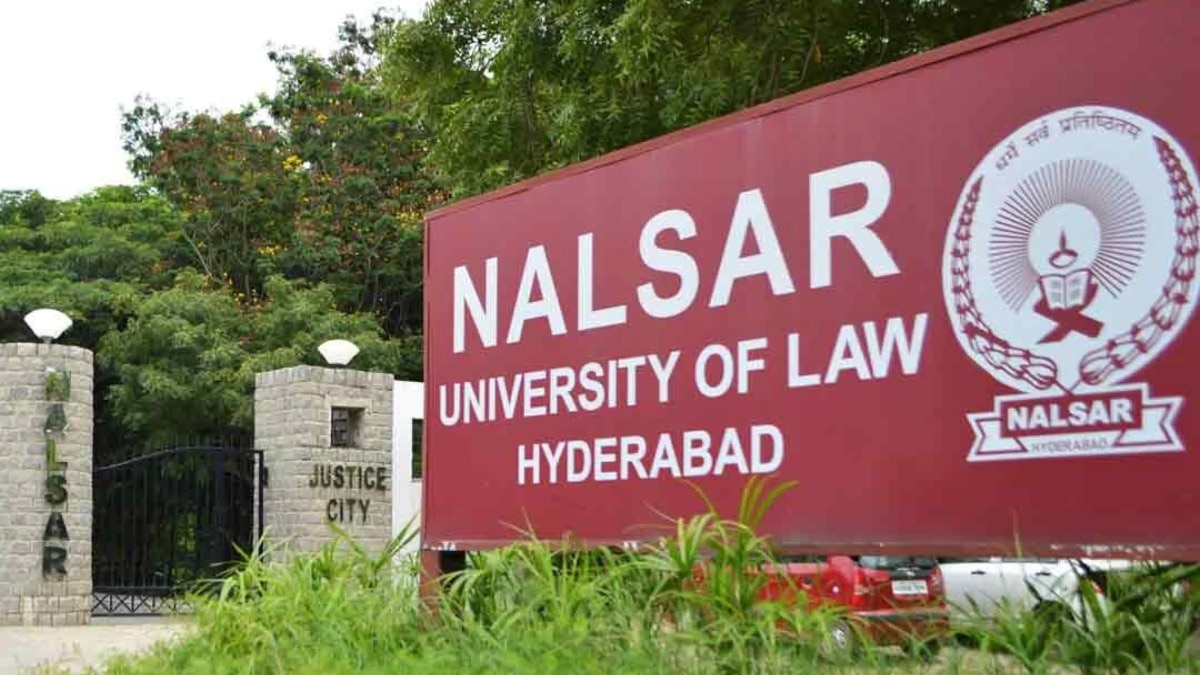
The episode prompted renewed discussion on how a university established to train future lawyers came to witness such an assertion of student dissent. NALSAR, ranked third among India’s law universities in the latest NIRF rankings, had institutional associations with former Chief Justices.
The initial efforts to establish NALSAR took shape in the mid-1990s under the leadership of Justice Prabha Shankar Mishra, who served as Chief Justice of the Andhra Pradesh High Court between 1995 and 1997.
The decisive phase came after Justice Umesh Chandra Banerjee assumed office as Chief Justice of the Andhra Pradesh High Court on 1 February 1998.
In 1999, the Andhra Pradesh government allotted 50 acres of land at Shamirpet for the university’s permanent campus.
Key Details
The university is additionally linked with Justice BR Gavai, who was appointed as the inaugural Dr BR Ambedkar Chair Professor on Constitutional Law and Social Inclusion, a position created to promote research and engagement in constitutional studies and social inclusion. According to.
The university’s subsequent development was carried forward under Professor Veer Singh, while Professor Faizan Mustafa, who took over in 2012, introduced a credit-based elective system that significantly expanded curricular flexibility while retaining academic requirements.
In November 2022, Professor Srikrishna Deva Rao, a member of NALSAR’s founding faculty, returned to lead the university as Vice-Chancellor after heading several other law schools in the country.
Today, NALSAR is positioned among India’s leading law schools and was ranked third in the National Institutional Ranking Framework (NIRF) 2025 law rankings.
Why It Matters
NALSAR’s first campus was located in Barkatpura, where the university operated from a dedicated building with hostel facilities for women students, a library, reading rooms, dining facilities, and an on-site kitchen. The arrangement was modest, but it provided the infrastructure necessary for.
In 2022, NALSAR announced steps towards more gender-neutral institutional practices, including changes relating to hostel facilities and official documentation.
NALSAR’s library now houses more than 27,000 volumes, including law reports, journals, periodicals, manuals, textbooks, and other legal reference materials.
What Reports Say
Coverage of the story so far points to:
Continued reporting by India Today as more details emerge