How AlgaeBarn Used Industrial Automation to Eliminate Manual Cap Labeling
AlgaeBarn built a $1,000 automated cap labeling cell combining robotics, machine vision and controls to improve quality, uptime and productivity. At AlgaeBarn, a Colorado-based producer of live aquaculture products such as copepods and phytoplankton, we manage nine product lines. Each product requires its own cap…
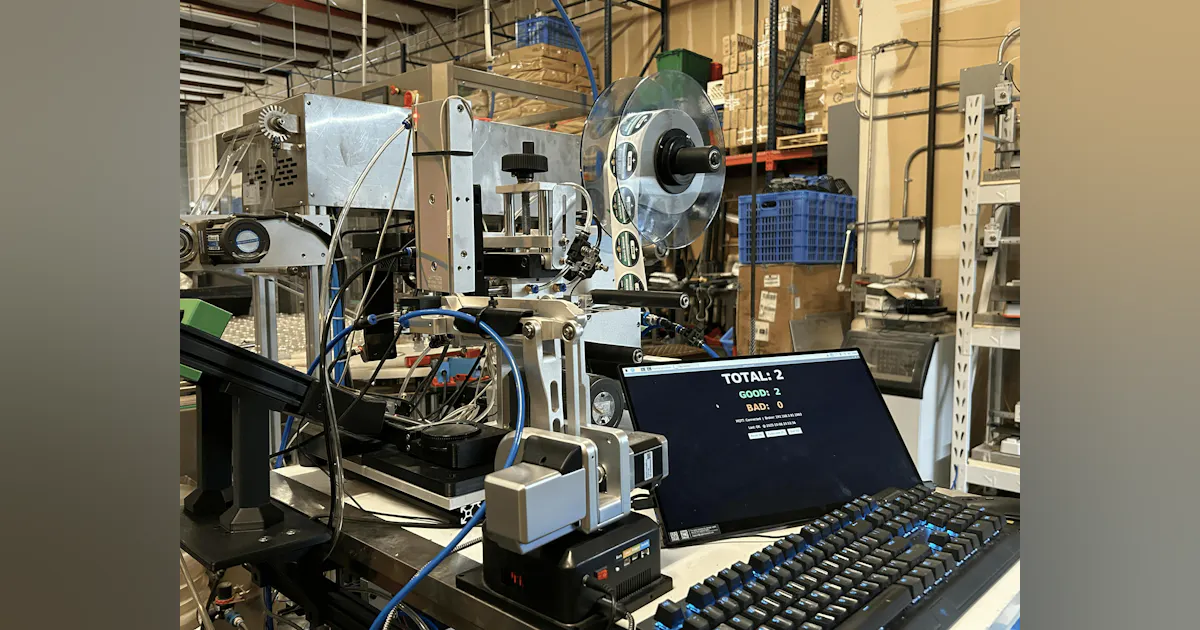
At AlgaeBarn, a Colorado-based producer of live aquaculture products such as copepods and phytoplankton, we manage nine product lines. Each product requires its own cap label, which once meant applying thousands of stickers by hand.
Before automation, employees from across the company periodically gathered for one- to two-hour "sticker parties," peeling labels and placing them on caps one by one. The sessions became a social tradition, but they also pulled operators, technicians and engineers away from their primary responsibilities.
What Happened
When labeled-cap inventory ran low unexpectedly, production employees had to pause other work to prepare more. As AlgaeBarn's Robotics & Automation Engineer, I identified this repetitive process as an opportunity for practical automation.
AlgaeBarn built a $1,000 automated cap labeling cell combining robotics, machine vision and controls to improve quality, uptime and productivity.
Most of the mechanical system was designed in-house using SOLIDWORKS, and the direct hardware cost was kept below $1,000.
Based on reduced manual labor and fewer production interruptions, the system is projected to generate approximately $40,000 to $50,000 in annual labor and productivity savings.
Key Details
The objective was not simply to apply labels faster. I wanted an autonomous cell that could orient each cap, apply the label, inspect the result and sort the finished part without continuous operator supervision.
He holds a master's degree in mechanical engineering from the University of Colorado Boulder, with a focus on robotics and control systems.
Akash Chinthamanipeta is a robotics and automation engineer at AlgaeBarn in Commerce City, Colorado.
They need reliable systems that solve the right problem, provide feedback when something goes wrong and deliver repeatable quality.
Why It Matters
Commercial labeling machines were available, but they presented two concerns: cost and control. Many systems assume that once an operator completes the setup, label placement will remain correct.
Small manufacturers do not always need the fastest or most expensive equipment.
Estimate the time, budget and expected value before committing to automation, and then design within those constraints.
What Reports Say
Coverage of the story so far points to:
Continued reporting by Automation World as more details emerge